

Toast or Tea
Why Breakfast Trips the Breaker (And What to Do About It)

It’s 7:15 AM. You’re running late. The kettle’s on, water just reaching a boil. You drop bread in the toaster, push the lever down, and…
Click.
Darkness.
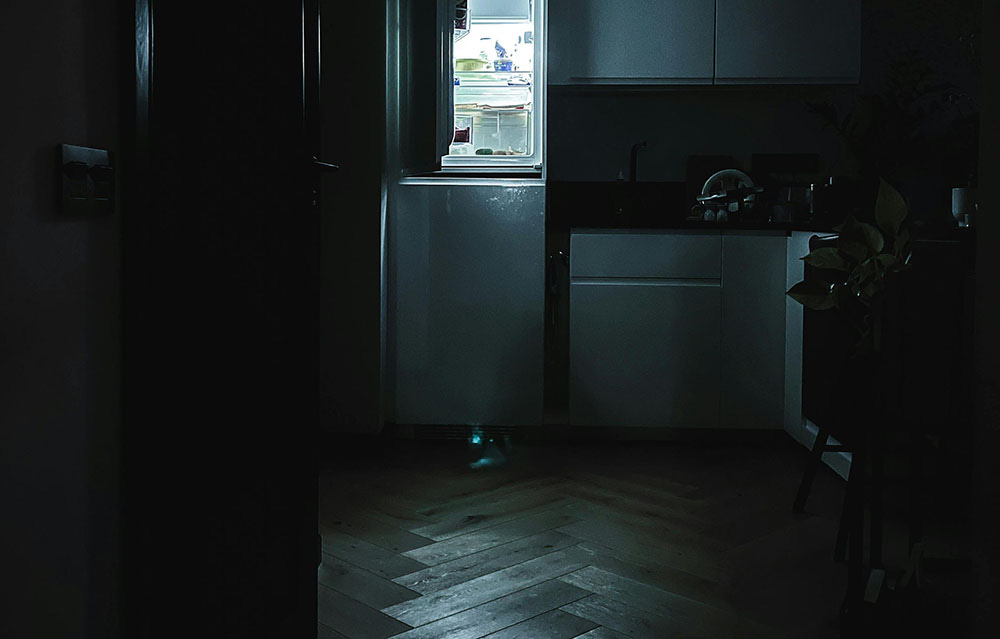
The kitchen goes silent. No burbling kettle. No glow in your toaster. Just you, in your dressing gown, choosing between caffeinated and fed because your kitchen’s decided you can’t have both.
You trudge to the breaker box, flip the switch, return to try again. Maybe the kettle’s nearly done, maybe you can slip the toast in as it’s winding down.
Click. The breaker trips again. Because of course it does.
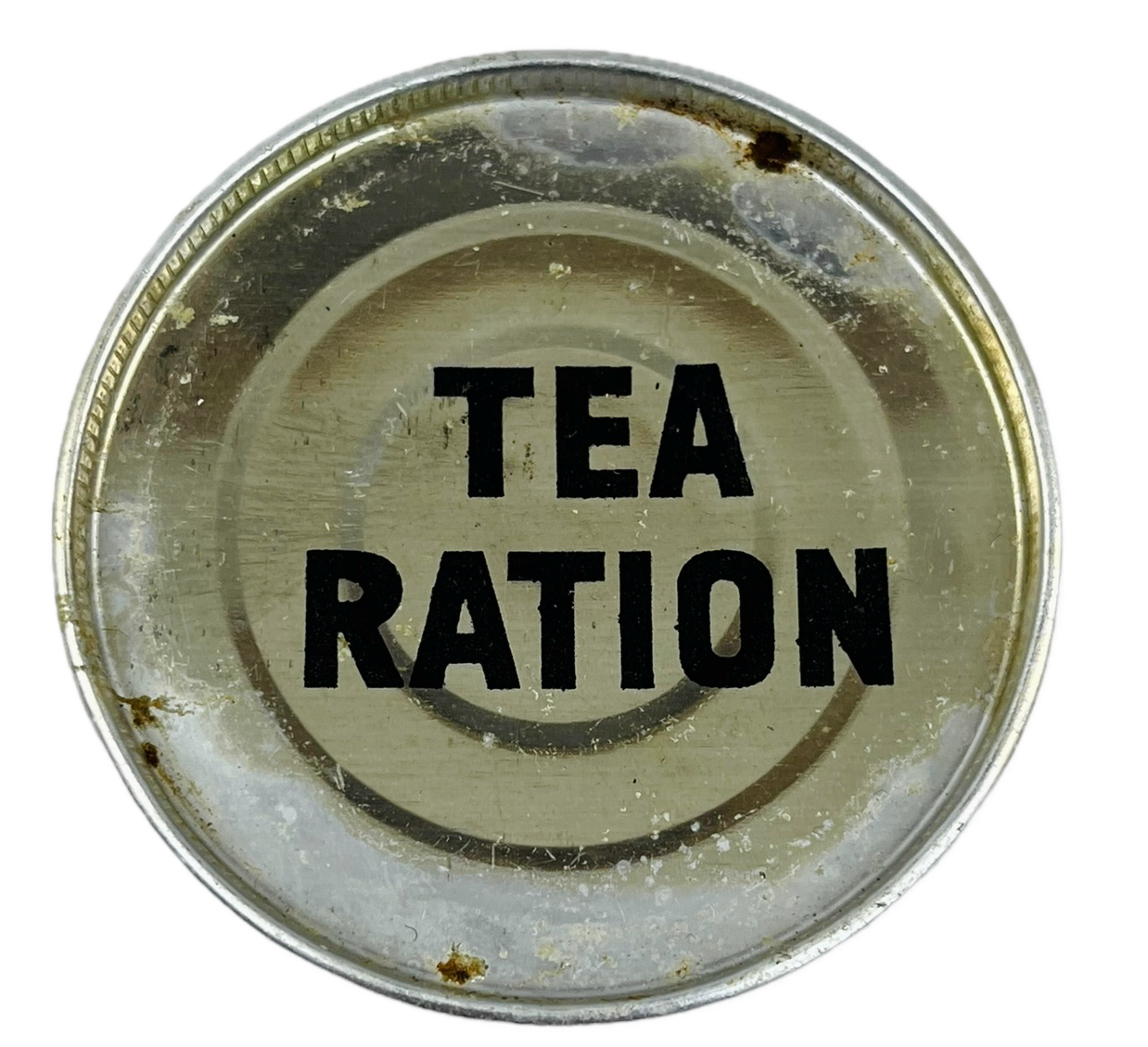
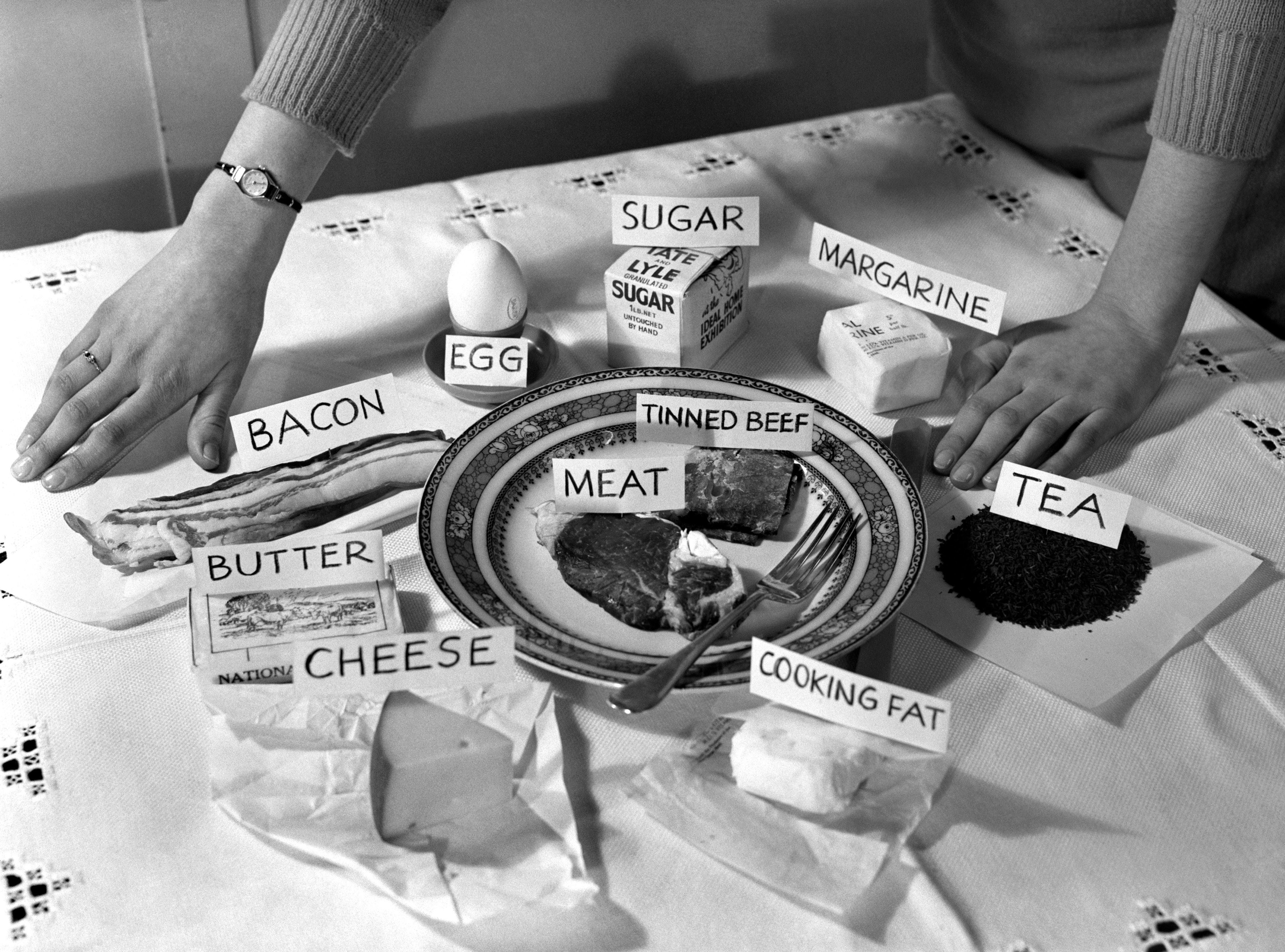
Here’s the maddening part: You’re not running a welding operation… yet your kitchen stages a domestic rebellion, forcing you to choose between tea or toast like some kind of English post-war rationing exercise1.
Of course, complaining about breakfast appliances is a bit precious. During WWI food shortages, British officials dismissed complaints about the restrictions as "greedy grousers" whinging about conditions the starving Germans "would look upon as luxury."
Fair point, really.
The Numbers That Ruined My Morning
I lived for a while with this problem before I realized why a modest goal of warm beverages and toast was seemingly impossible.
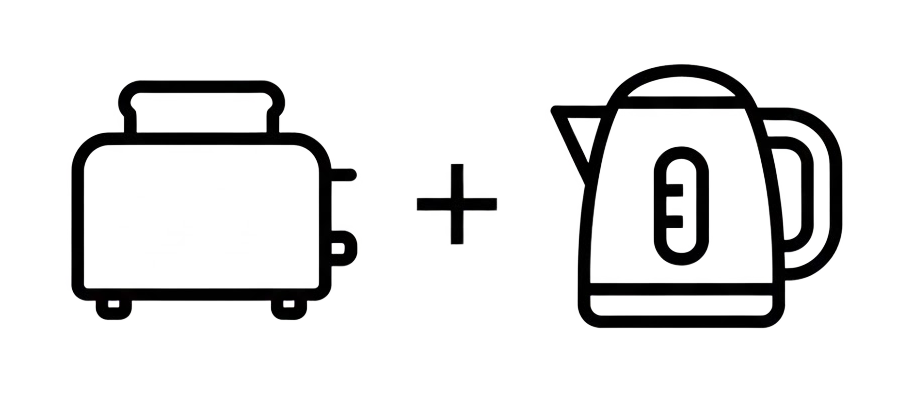
The outlet was rated for 15 amps and could only handle 1,800 watts. I was asking it for 2,500. Even if I upgraded that outlet to 20 amps (2,400W in North America), I’d still be overloading it. The kettle and toaster together wanted more power than a single outlet can provide.
The solution isn’t a bigger breaker, a better outlet, or different appliances. It is separate circuits which means someone needed to plan where high-draw appliances would actually go before the walls were closed up.
How Much Power Your Outlet Can Handle
Voltage is just the electricity standard in your country:
North America: 120V
Most of the world: 230V (including Europe/UK)
Amps tell you how much electricity an outlet can safely provide. More amps = more power.
Power limits for common outlets:
North America:
15A outlet = 1,800W max
20A outlet = 2,400W max
Europe: 16A outlet = approximately 3,680W max
UK: 13A outlet = about 3,000W max
The Gap in Kitchen Planning
Architects and kitchen designers will spend hours perfecting your work triangle, ensuring your counters are the right depth, positioning your sink for optimal natural light. What often gets a cursory glance or gets delegated to “the electrician will sort it” is part of the infrastructure that makes a modern kitchen function.
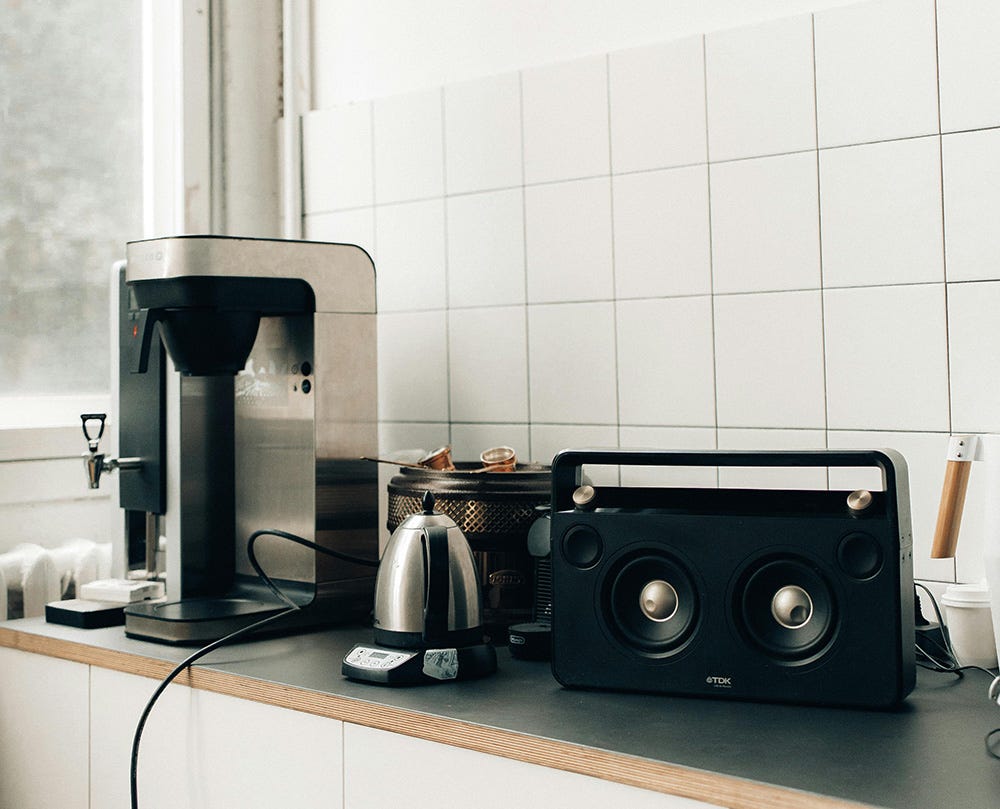
Standard practice puts the microwave on a dedicated circuit. Everyone remembers this one because it’s code in most places. What gets missed is that you’ll have three or four other power-hungry appliances all clustered in the same two-foot stretch of counter: kettle, toaster, coffee maker, possibly a waffle iron or food processor or electric skillet. These aren’t occasional-use items, they live on your worktop or counter because you use them daily, often simultaneously, and generally when you’re trying to eat breakfast and leave the house.
Electrical code ensures you have the minimum number of circuits for safety but does not ensure those circuits are positioned appropriately. The result is kitchens with perfectly adequate electrical capacity in aggregate, but poor circuit distribution because no one mapped out the morning routine during the design phase.
What Actually Draws Power
The pattern is predictable: anything that heats water or air is going to demand serious wattage.
Notice that a kettle alone (on average) can consume 70% of a standard circuit’s capacity regardless of voltage. Add another heat-generating appliance at the same time, and you exceed both the capacity and the safe continuous limit2 for both 15 A or 20 A outlets.
NOTE: The numbers differ between 120V and 230V systems, but the fundamental problem: two heating appliances on one outlet is universal.
Kitchens aren’t the only danger zones, though they’re the most frequent offenders:

Bathrooms: A hair dryer on high (1,200–1,875W / 2,000–2,400W) can max out a circuit by itself. Add a curling iron and you’re in the dark, wet-haired and late.
Living areas: Space heaters (750–1,500W / 1,500–2,400W) are circuit killers, often plugged in alongside a vacuum or iron with predictably dark results.
Workshops: Corded power tools such as circular saws, shop vacs, air compressors frequently trip breakers when used together, especially on long extension leads (cords) that add resistance.
The common thread: heating elements are power hogs. If it glows, it hogs
Set Your Kitchen Up for Real-Life Use
Think Beyond Outlet Placement
If you’re building or renovating, this is your moment to get the electrical layout done properly. The question isn’t “where do outlets go?” but “where will high-draw appliances be used, and will they run simultaneously?”

Walk through your actual morning routine with your designer and electrician. Where does the kettle live? The toaster? The coffee maker? Will you ever run two at once? (The answer is yes.) Each appliance should be on its own breaker. If not, don’t simultaneously use two outlets that are on the same breaker.
Put Circuits Where You Actually Need Them
Dedicated circuit for microwave
Dedicated circuit for refrigerator
At least two 20A circuits for countertop appliances
Additional circuits if you have a kettle zone, coffee station, or toaster setup
The key is mapping circuits to where you'll actually plug things in. Having two separate 20A circuits doesn't help if the electrician wired all the outlets in your breakfast zone to the same breaker, they need to be separate. This costs almost nothing during construction and saves you from years of morning darkness.

Making Existing Kitchens Work
Most of us are working with existing kitchens that weren’t planned around simultaneous kettle-and-toast operations. Solutions require varying degrees of effort.
Learn which outlets share circuits. The tedious method: plug a lamp into each outlet, go flip breakers one at a time, see what goes dark together. Map it out. You’ll likely discover that your entire breakfast counter is on one or two circuits while the outlet near the bin that you never use is on its own dedicated line.
Redistribute your appliances strategically or use the stove. Spread your high-draw devices across circuits. Kettle on one side of the kitchen, toaster on the other. Or boil water on the stove.
Stagger your usage. The least satisfying solution but sometimes the only practical one: boil the kettle first, then make toast.

Tip: During British rationing, the Ministry of Food published helpful tips for making tea rations stretch, including reusing breakfast tea for elevenses by adding boiling water and pouring it into a Thermos. At least you're choosing the order voluntarily.3
Add circuits. If you’re doing any other electrical work ask your electrician about running an additional circuit. It’s relatively straightforward if walls are already open; more involved but still possible if they’re not.
Which Appliances Can Share a Circuit
If you’re trying to sort out which appliances can coexist on one circuit, you need to know what they actually draw. Most appliances have an electrical rating label, usually on the back or bottom that lists voltage (V), current (A), and often power (W).
If wattage isn’t listed, you can calculate it: Watts = Volts × Amps. A label showing 120V and 12.5A means 1,500W. A label showing 230V and 13A means roughly 3,000W.
Rule of Thumb Planning
If it heats something, assume it draws 1,000–1,500W (North America) or 2,000–3,000W (UK/AU/Asia). That’s your working assumption for kettles, toasters, coffee makers, hair dryers, space heaters, and irons.
One high-draw appliance on a 15 A (120 V) or 13 A (230 V) circuit? You’re already approaching the limit. Two? That’s almost guaranteed to trip the breaker.
Mash Me a Hot Sweet Brew 🫖🍞
When tea rationing ended in 1952, the Daily Mirror's headline was "Mash me a hot sweet brew!"

Achieving the same freedom: There’s always sequential breakfast. Toast first, then tea. Terribly civilized, utterly aggravating, and entirely avoidable.
The end of tea rationing also made the New York Times. The British government called it "the best piece of news" they'd given the public in twelve months. Your kitchen de-rationing won't make international headlines, but the relief will be real.
Food rationing in post-war Britain lasted until 1954. Yes, 1954. Nearly a decade after victory. The indignity persisted.
When "T-Day" arrived, grocers worried about panic buying. Sugar remained rationed for another five months, so Britons could finally have unlimited tea, they just couldn't sweeten it. The Ministry called this progress.
Safe continuous load is the amount of power you can draw from a circuit consistently over time without overheating the wiring or tripping the breaker. It’s typically about 80% of the outlet’s maximum rating. Exceeding this occasionally is usually fine, but doing it regularly can stress the electrical system.
During World War II, when tea was rationed to as little as 2 ounces (57g) per adult per week, the Ministry of Food and home-front publications offered tips to maximize every tea leaf, avoid wasting any brewed tea, and ensure proper brewing techniques to make a limited ration go further including the following technique (not recommended or endorsed).
The “Double Brew” Technique for Elevenses: Instead of pouring away remaining tea after breakfast, fill the teapot with sufficient fresh, boiling water. Allow it to stand and then strain this liquid into a Thermos flask for your 11 a.m. cup, effectively getting two uses out of one set of leaves.
once again, spot on topic! This only happens in our house in Sicily - and it's a BIG problem! Printing this out to show my husband and keep as a reference. Always so grateful to you!!
This happens in our house. We can use the hot plate on the stove but not with the air fan on! Maddening!